

December 31, 2018

Future nature: Where does nature belong in our ever-perfect visions of the future?

I came to this question from a 45degree angle, after becoming intrigued by the large artworks installed outside construction sites portraying ‘artist’s impressions’ of new developments.  These digital drawings of the completed construction are often beautifully composed and rendered, with stunning attention to detail.  They usually include clip art of tiny people to provide examples of how the community will use the space and where they will sit, walk, eat, read the paper, purchase a coffee, converse and interact with the design.

I see these ‘artist’s impressions’ as visions of the future.  Perhaps not recognizable as being the sky-cities, climate domes and space-stations of popular science fiction future fantasy, these visions are portraying the future of a few short years ahead.  But I think they make an important comment about how we want to live.  

The first telling sign is their commitment to perfection.

The way in which natural forms are included in these renderings is particularly interesting, and can give us a clue about our idealistic relationship with nature.

 Grass, trees, plants, flowers, shrubs and even sunlight is allowed in our future vision – on the condition that they are perfect, and in no way betray themselves as being faulty, primitive, weak, sickly, messy, unpredictable or uncontrollable.  In other words, nature is welcome in our future vision, just as long as it isn’t too natural.
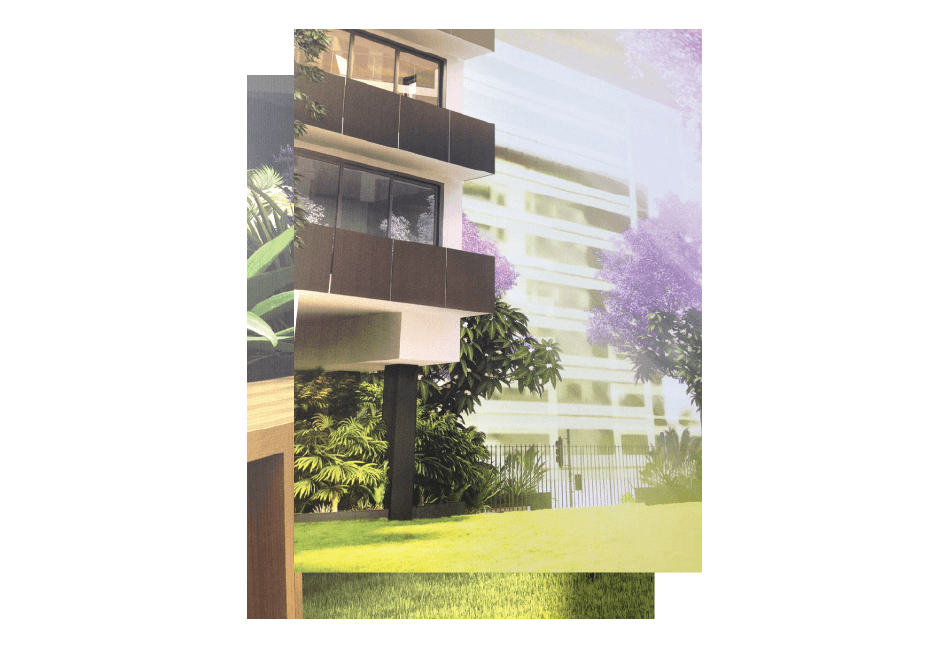
Thinking and researching on this topic has led me to an even more interesting observation/critique:

We are striving for an aesthetic utopia, free from anything which might remind us of our naturality, and thus our mortality.

For centuries, we humans have celebrated the spiritual and intellectual sides of ourselves, separating ourselves from the animal world and thus lifting us closer to the divine.  This quest is a collectively distinguishing act, embedding humankind with purpose, meaning and superiority over the natural world.  

Historically, organized religions and spiritual belief systems have satisfied our need to justify our existence – a place to ignore our physical selves – our bodies, which are traditionally sinful, corrupt, animalistic, licentious and which consistently betray us.  The more we can surround ourselves with reminders of our own importance and superiority, the more we can be distracted from thoughts of our animalistic heritage, our imperfections and our mortality. 

The next level of observation within the study of these digital renderings is, of-course, the virtual nature of them.  How different is a digital rendering of a new imagined apartment block to a digital rendering of a virtual world or a science fiction future fantasy?  Are virtual worlds our new temples?  Do we dive into virtuality in order to escape our physical/natural shortfallings, worshipping at the alter of computer generated perfection?   Perhaps we are unwittingly celebrating in a utopian vision of life where everything – including nature – is controlled.

December 16, 2018

Understanding injured workers, a multi-modal perspective

Imagine a woman—let’s call her Mary—with advanced dementia. Mary is sometimes aggressive with her carers. She particularly resists their attempts to help her dress: Mary just hates to wear clothes. In the end, the carers decide to let her roam around the nursing home naked, clad only in a nappy.

Or imagine a young man called Steve, born with both profound cognitive impairments and physical disabilities. Food is one of Steve’s greatest pleasures and he particularly loves to feed himself, though he makes a great mess when he does so. His family decides to lay out newspaper and a bowl of food on the floor for his meals.

What’s wrong with these stories? Scouring mountains of philosophical theories of ethics won’t provide any answers. Steve and Mary aren’t harmed by the way they are treated. They get the outcomes they seem to seek and which make them happy. Their carers are motivated by love and kindness and are responsive to their joy and their distress.

Most people not burdened with a long philosophical education would simply say that Steve and Mary are not treated with dignity. The philosopher Ruth Macklin summed up the prevailing philosophical view in the British Medical Journal when she denounced dignity as a “useless concept.” If it isn’t just a faddish word for respect for autonomy or for rational persons, then it’s waffle. To be fair, there are reasons to be suspicious of appeals to dignity. It has long been the favoured manoeuvre of religious opponents of euthanasia, stem cell research, IVF, same-sex relationships and genetic manipulation. To most philosophers, it looks like the sort of thing you might appeal to when you’ve run out of good arguments.

But dignity is real, and its loss can be tragic. The term dignity can mean many things, but at its core it is about social equality. For better or worse, we are the kinds of creatures who care deeply about the regard that others have for us. We want to be esteemed, and, especially in modern times, to be recognised as an equal.

Our social esteem is acutely vulnerable in care facilities, even when other people are not the problem. Think of the cancer patient who has lost control of his bowels. We readily appreciate his humiliation. No matter how carefully others seek to reassure, he feels he cannot hold his head high, and meet others in the eye. His social standing is threatened. It is not uncommon for patients to place photos of their robust and healthier selves on their bedside tables. They are saying to hospital staff: that is really who I am—your equal—and don’t forget it.

The greatest threats to dignity come not from our own bodies, however. They come from others, with a thousand small cuts. It can be a tone of voice, evident impatience, rough handling, ignoring a cry of distress. When a carer at a nursing home talks to a resident in a sing-song voice, she is telling everyone in earshot that the resident is no more than a child. When a staff member handles a very frail resident roughly, when they laugh at her wails of distress, or scold her like they would a naughty puppy, we are left in no doubt that the resident has slipped dangerously down the social hierarchy.

In so many familiar ways we express our regard for each other’s social standing. We thank the shopkeeper when he hands over the change. We apologise to our colleagues when we keep them waiting. We respect our neighbour’s privacy and don’t ask him how much he earns. We unconsciously use elaborate social norms on a daily basis to signal that others count, that they are somebodies. And we expect the same in return. We are polite to our employers, but don’t want to kowtow. If others have inconvenienced us, we appreciate a token gesture of acknowledgment. A caste system where some are not permitted to touch their superiors, or share a meal with them, or even meet them in the eye, is repulsive to most of us. As the legal philosopher Jeremy Waldron says, we are all Brahmins now.

 © Anna Langdon Studio 2022